01
Precise technical communication
We define the parameters relevant to engineers, integrators and procurement teams: sensor, FOV, focal length, mount, mass, documentation, volume and component qualification.
IRIX Polska supports manufacturers and integrators that need a lens, lens element, imaging component or optical solution matched to their own system.
 Concept visual
We apply IRIX experience in designing and producing photographic and cine lenses to B2B solutions for devices, measurement systems, industrial cameras, electro-optical heads, UAV platforms and R&D projects.
The offer covers existing lenses, lens elements and optical components, mechanical adaptations, custom projects, short series and software for selected optical-module functions.
Each project starts with an analysis of the sensor, field of view, working distance, spectral range, mass, dimensions, mount, environmental conditions, documentation and expected volume.
We define the parameters relevant to engineers, integrators and procurement teams: sensor, FOV, focal length, mount, mass, documentation, volume and component qualification.
We supply optics, lens elements, modules and adaptations and support their integration into drones, cameras, heads and other customer devices.
Functions, parameters and qualification requirements are confirmed in documentation for the agreed configuration.
The role of the Irix 300SR was to deliver high-quality images of the Earth's surface to a nanosatellite camera while keeping the mass and dimensions suitable for a small space platform. Its mirror-type telescopic design provides a 300 mm focal length and an f/5.6 aperture, while the complete lens is only 75 mm long, 70 mm in diameter and weighs approximately 250 g.
The first experimental prototype formed the main optical section of the Polish Światowid nanosatellite. It worked with a camera using a 5.1 MP, 2/3-inch CMOS sensor. The system was designed for Earth imaging in the 390–750 nm visible spectrum, with a planned ground resolution of 4.7 m per pixel and an imaging area of approximately 12 × 10 km.
Image quality was only one part of the challenge. Materials and technologies were selected with launch vibration, wide temperature changes, vacuum and radiation in mind. The 300SR is therefore a practical example of IRIX expertise in compact optical design, sensor integration and preparing a solution for operation in a demanding environment.
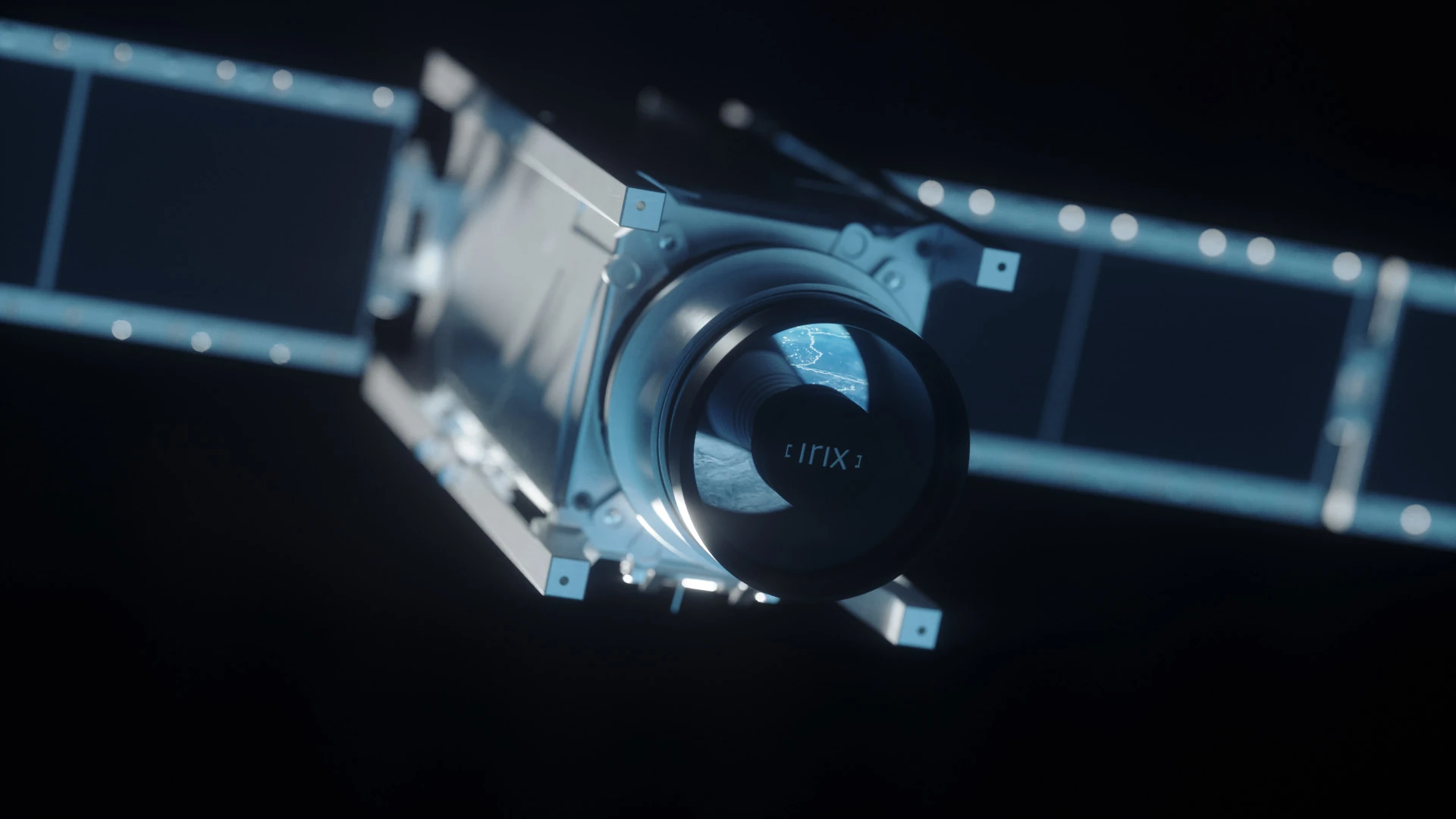 Concept visual
Key organizational information for the first contact.
Details of the entity operating the IRIX Polska website and the operational office address.
You do not need complete documentation at the outset. Send us a concept outline, sketch, sensor datasheet or requirements table. We will review the materials and identify the key parameters needed to select or design the right optical solution.